
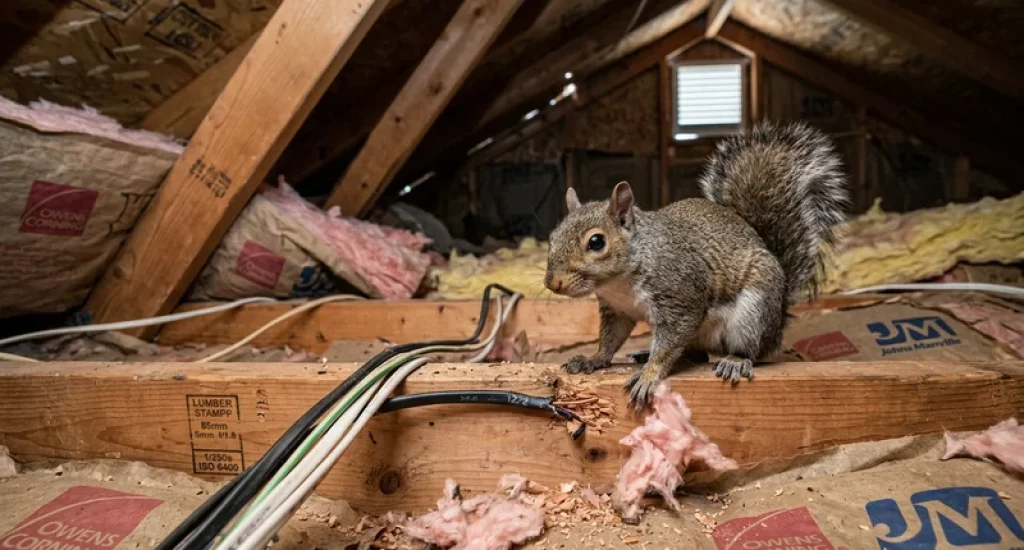
As the December chill settles over Hamilton, Burlington, and Oakville, most homeowners are focusing on holiday decorations and keeping the furnace running. However, inside the quiet, dark spaces of your attic, a different kind of activity is ramped up.
In December, wildlife activity doesn’t stop, it moves indoors. Species like squirrels and raccoons spend up to 22 hours a day inside your attic to escape the Southern Ontario frost. While their noise is a nuisance, the invisible damage they do to your home’s electrical and ventilation systems represents a significant safety hazard.
As we approach January 1, 2026, new provincial safety regulations are coming into effect that every homeowner needs to know. Here is why securing your attic this December is a matter of home safety, not just wildlife removal.
Electrical Fire Risks
Unlike humans, squirrels and rodents have incisors that never stop growing. To keep these teeth sharp and manageable, they must chew on hard materials. In an attic, the most accessible tension-relief for an animal is your electrical wiring.
According to data from the National Fire Protection Association (NFPA), rodents are estimated to be responsible for 20% to 25% of all house fires in which the cause is listed as undetermined.
When a squirrel or mouse strips the plastic insulation from a wire, it creates an exposed conductor. In the dry environment of an attic, surrounded by flammable insulation and wooden rafters, a single spark or arcing event can ignite a fire that smoulders undetected for hours. This risk is amplified in December as homeowners put additional load on their electrical systems with space heaters and holiday lighting.
Expert Advice: ESA Safety Check
The Electrical Safety Authority (ESA) of Ontario specifically warns homeowners to check for visible signs of gnawing on interior and exterior wiring during seasonal transitions. If you notice flickering lights or circuit breakers that trip without a clear cause, the ESA recommends turning off the circuit and contacting a licensed electrical contractor immediately. Ignoring these early warning signs in the attic can lead to catastrophic structural loss.
New 2026 Ontario Fire Code: CO Alarm Update
One of the most critical updates for homeowners is the change to the Ontario Fire Code, which takes effect on January 1, 2026.
The Requirement: Starting in 2026, all residential homes with fuel-burning appliances (furnaces, water heaters, gas stoves) or attached garages must have working Carbon Monoxide (CO) alarms on every storey of the home, not just outside sleeping areas.
The Wildlife Connection: Wildlife frequently target exhaust vents as entry points. Raccoons can pull off plastic vent covers, while birds and squirrels often stuff these pipes with dry nesting material (grass, twigs, and feathers).
- The Danger: A blocked furnace or water heater vent causes CO, the silent killer, to back up into your living space.
- The Result: If you have wildlife nesting in your vents this December, you aren’t just risking a breakdown of your appliances; you are risking a life-threatening buildup of gas that will trigger your newly required CO alarms.
Why Wintering Raccoons are a Problem
It isn’t just the chewing that causes damage in December. An adult raccoon in Southern Ontario can weigh upwards of 20 to 30 lbs as they bulk up for the winter. When a raccoon chooses your attic as a winter den, they aren’t just sleeping on the floor. They are:
- Compressing Insulation: Raccoons trample down blown-in insulation, destroying its R-value (heating efficiency). This makes your furnace work harder and spikes your December heating bills.
- Damaging Structural Support: We often see raccoons tear apart ductwork to access warmer air directly from the furnace, leading to massive heat loss in the rest of the home.
- Latrine Hazards: Raccoons create latrines (designated waste areas) in your attic. Over the course of a long December, this waste can seep through your drywall ceiling, causing structural rot and a severe biohazard.
Our Winter Protection Process
At Bad Company Wildlife, our December inspections are designed to find the hidden damage before it becomes an emergency.
- Thermal Imaging: We use thermal cameras to locate animals through walls and identify cold spots where animals have destroyed your insulation.
- Vent Fortification: We replace flimsy plastic covers with heavy-duty, galvanized steel guards that are impossible for raccoons to pull off.
- Safe Exclusion: We use humane one-way doors that allow the animals to leave but prevent them from returning to the warmth of your attic.
Signs to Watch For
If you are hosting family this December, keep an ear out for these Red Flags:
- Flickering Lights: This can be a sign of arcing wires in the attic or walls.
- Odours: A faint burning plastic smell or a sudden ammonia scent near the attic hatch.
- The Heavy Thump: Raccoons are less active in the cold, but when they move, they sound like a heavy person walking in the attic.
Secure Your Home Before the New Year
Whether you are in Hamilton, Burlington, or Niagara, don’t let a wildlife infestation compromise your family’s safety this winter. With the 2026 Fire Code changes just weeks away, there is no better time to ensure your vents are clear and your wiring is protected. Don’t wait for the alarm to sound. Contact Bad Company Wildlife for a comprehensive winter wildlife inspection and safeguard your home for 2026.


