
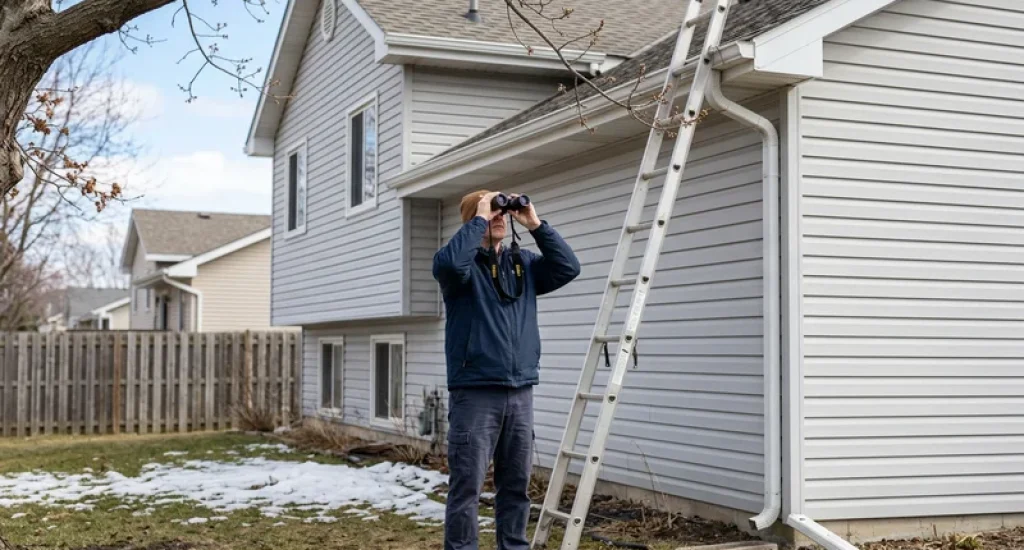
As the snow finally recedes in Hamilton, Burlington, and the Niagara Region, homeowners are stepping outside to assess the toll winter has taken on their properties. While most people focus on deck staining or garden prep, the most expensive threats to your home are often the ones you can’t see from the driveway.
In Southern Ontario, March is the great awakening. Animals are emerging from winter torpor, mating, and scouting for nurseries. A small gap created by ice expansion in January becomes a front door for a pregnant raccoon in March.
To help you protect your investment, we’ve compiled the definitive Spring Wildlife Prevention Checklist. Taking these 7 steps this month can save you thousands in emergency wildlife removal and restoration costs.

1. The RSI Inspection (Roof-Soffit Intersections)
The most common entry point for raccoons and squirrels is where a lower roofline meets an upper soffit.
- What to look for: Use binoculars to inspect the corners where roofs overlap. Look for chew marks on the plastic or aluminum soffit or gaps where the material has sagged.
- Why it matters: Raccoons are remarkably strong; they can grab the edge of a loose soffit and peel it back like a tin can to access your warm attic.
2. Clear the Animal Bridges (Tree Trimming)
In Oakville and Burlington, many homes are surrounded by mature maple and oak trees. Overhanging branches are a direct highway to your roof.
- The Rule of Thumb: Ensure all tree limbs are trimmed at least 6 to 8 feet away from your roofline.
- The Benefit: Squirrels can jump significant distances, but a 6-foot gap makes your roof much less attractive. This also prevents roof scuffing, which can loosen shingles and create entry points.
3. Inspect All Exhaust Vent Covers
Winter ice can make plastic vent covers brittle, causing them to crack or fall off entirely.
- The Check: Look at your dryer, bathroom, and stove exhaust vents. Are the louvres (flaps) still there? Are there any gaps around the housing?
- Pro-Tip: If you see white-wash (bird droppings) on the siding below a vent, you likely already have a bird scouting the area for a nest. Install galvanized steel guards now before the Migratory Birds Convention Act prevents removal later this spring.
4. Foundation and Weep Hole Review
Mice and rats only need a hole the size of a dime to enter your home.
- The Walk-Around: Walk the perimeter of your foundation. Look for new cracks caused by the freeze-thaw cycle. Pay close attention to where utility lines (A/C, gas, cable) enter the brickwork.
- The Fix: Seal small gaps with copper mesh and high-quality exterior caulk. Avoid expandable foam alone, as rodents can chew through it in seconds.
5. Deck and Shed Perimeter Check
March is peak skunk and opossum mating season. They are currently looking for dark, dry places to burrow.
- The Search: Look for latrines (piles of droppings) or fresh mounds of dirt near the base of your deck, porch, or garden shed.
- The Preventive Measure: If you don’t have trench screening installed, consider blocking off these areas with heavy-gauge wire mesh buried 12 inches into the ground.
6. Gutter Maintenance & Shingle Integrity
Clogged gutters do more than cause basement leaks; they rot the fascia boards behind them.
- The Vulnerability: Water-damaged wood is soft. A squirrel can chew through a rotted fascia board in under an hour to get into your attic.
- The Action: Clean your gutters of winter debris and ensure water is flowing away from the house. Check for shingle grit in the gutters, which indicates your roof is aging and may be more vulnerable to animal penetration.
7. Attic Light Test
One of the easiest ways to find a hole is from the inside.
- The Test: On a bright sunny day, head into your attic with the lights off. Look for daylight peeking through the eaves or corners.
- The Warning: If you see light, animals see an opportunity. Even if you don’t see light, look for trampled insulation or chewed wires, which are signs of a past or present mouse infestation.
The Economic Value of Prevention
In 2026, the average cost of a professional wildlife removal and decontamination service in Ontario ranges from $500 to $2,500, depending on the species and the damage.
By contrast, a Saturday afternoon spent following this checklist and spending $50 at the hardware store on sealant and mesh can prevent these costs entirely. Furthermore, many home insurance policies in Ontario do not cover damage caused by vermin or rodents, meaning the bill for attic restoration often comes directly out of the homeowner’s pocket.
When to Call the Professionals
If during your inspection you find active nesting material, see an animal entering a gap, or hear scratching noises, do not seal the hole. Sealing an animal inside can lead to:
- Extreme Structural Damage: A mother raccoon will tear through your roof to reach her trapped babies.
- Decomposition Odours: An animal dying inside your walls creates a biohazard and a lingering scent that can last for months.
- Legal Issues: In St. Catharines and Brantford, provincial laws mandate the humane treatment of wildlife during the Sensitive Season (March-August).
Need a Professional Inspection?
If you aren’t comfortable climbing a ladder or want a 20-point professional assessment, Bad Company Wildlife is here to help. We serve Hamilton, Burlington, Oakville, and the Niagara Region.
Protect your home before the baby boom begins. Book your spring wildlife inspection today.


